Showing posts with label Heart Felt Homeschooling. Show all posts

Monday, 19 December 2016

Building Fine Motor Skills for 7yos

Are you trying to help your 7 yo build some fine motor skills?   Me too.     There are so many ideas out there for preschoolers and that's as it should be, but the older kids get easily bored with them. 


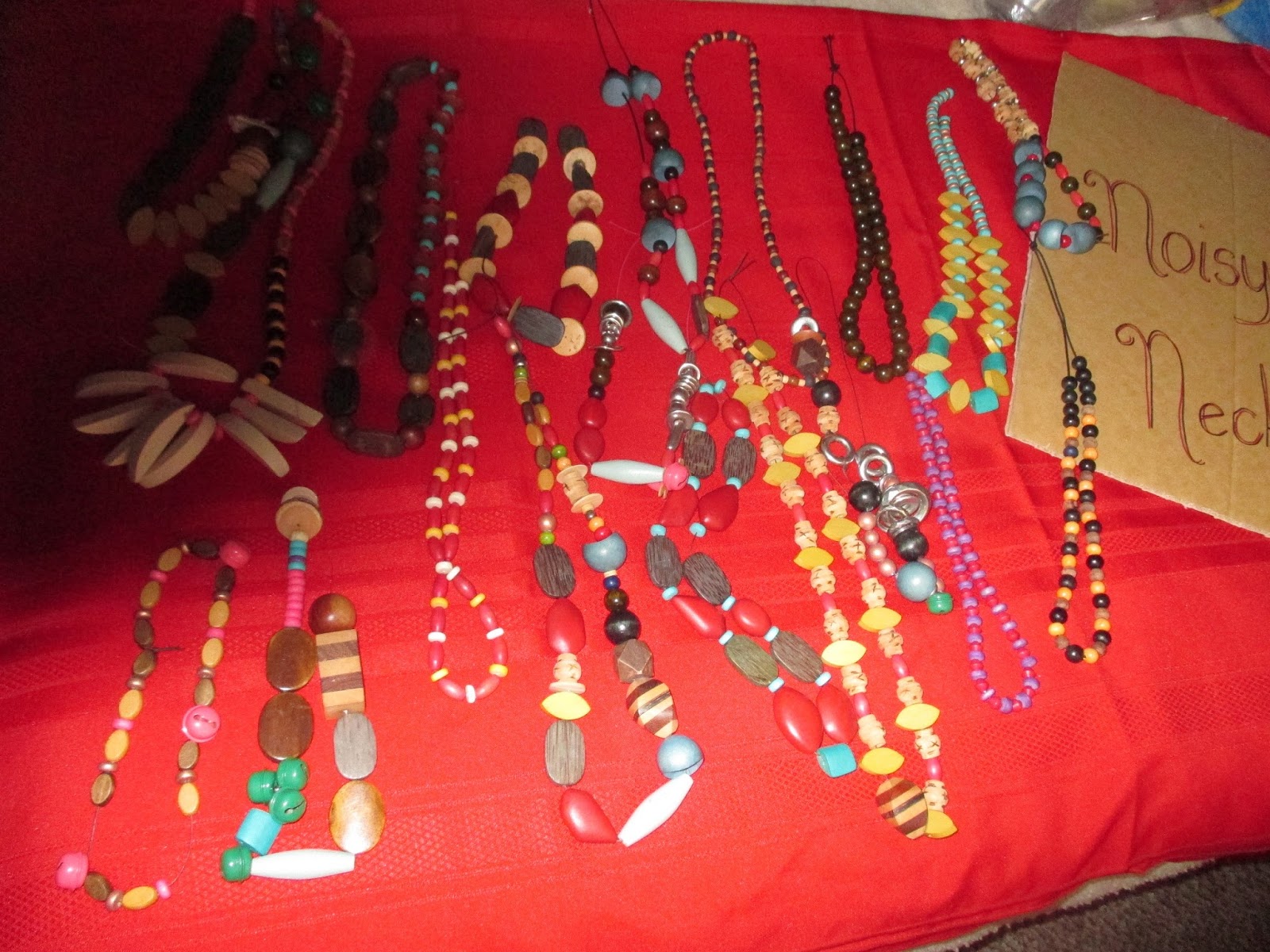
So, prompted by a request from a fellow Mum, in response to seeing these necklaces the girls made this week, I've gone searching through our resources here at home, and got Miss 7 re-inspired to try some of them.  


In the photos, you can see some of the ones we have already, all purchased from our local op-shops for very little.     These are the ones I found easily without looking too hard.     There are so many more options, but these are the ones Miss 7 is most likely to use at the moment. 


I also found lots of great ideas online, which I've listed below - we'll definitely be trying some of these in the new year.  

You can also view my board on Pinterest here to see these ideas in picture form.    If you're a visual person, then it's worth a look.  

I also have a pinboard of shape activities, ready for next year when we start concentrating on shapes.    Many of these are fine motor skills activities as well.  

Before you read through the list below, you might want to read this lady's page about why fine motor skills are important for children of various ages to develop. 

So, in no particular order and in a somewhat organised fashion, here are the ideas I found, but there were many more.  

SYMMETRY
This one is about arranging shapes symmetrically within a circle.

Making symmetrical snowflakes

Another symmetrical snowflake activity   

MARBLES
This is a great game involving marbles on golf tees, which requires balance and careful positioning,  plus some strategy.  

Marble runs are also a great way to improve fine motor skills and get those 3-D skills working and developing.   We love ours and they are easy to find at op-shops or online.   

This is another great idea for marbles, which involves some sewing as well.  

PATTERN BLOCKS
We love our pattern blocks and I have found some websites that have great ideas. 

There are some great ideas here for making shapes from shapes, if you're happy to pay for the cards.

This site has lots of free printables for you to try out, from simple to more complex. 

This site has printables for making letters and numbers with the pattern blocks

And this lady has themed pattern block pictures, so it's worth having a look around her site for those and many other resources

Seriously, though, Google 'pattern block pictures' and you'll find a wealth of websites and pictures for all age ranges. 

STRAWS and TOOTHPICKS
We have this resource at home and the girls both really enjoy making all sorts of things with them.   Today, our loungeroom was filled with jellyfish and lionfish, squid and sharks, all made from these straws and connectors.    This is our 4yo in the midst of making her aquatic creations.   


This is a similar concept, making shapes with toothpicks and gumdrops, this time with straight lines.

And this lady prefers to use grapes instead of gumdrops.


SEWING AND WEAVING
Sewing and weaving are great fine-motor exercises for children older than pre-school level.   They can do simple weaving right through to sewing on fabric. 

This is a great, basic weaving idea on a large scale, for little hands and big ones.   Simple enough to achieve with household items and adapt to various sizes.  

This is a simple idea, great for Valentine's Day.

Or you could do different shapes like these. 

We are going to learn about shapes this coming year, so I was really impressed to find this activity. 

This sewing idea incorporates the concept of in and out of the fabric, and the dots on the fabric help the children to create lines and pictures.    I'm sure you could draw basic outlines on dotted fabric, or let them make their own pictures.   

Miss 7 made these earlier in the year to put in the Samaritan's Purse Christmas boxes.  


AND MORE MISCELLANEOUS IDEAS
This game looks really fascinating if you'd like to learn how to use chopsticks.  Fairly easy to organise, I would think.

Here's a great idea for some Christmas craft that could appeal to various ages and the kids could make it as simple or as complicated as they like.  

This looks like a great alternative painting activity for older kids that could lend itself to all sorts of creativity.

The lady at the above website is a pediatric occupational therapist and has some great ideas for building those fine motor skills in older children.  

I like the look of this one from her website, using little white balls, pipe cleaners and pieces of pool noodle.   There is no end to what children can create with these.   

So, I hope I've inspired you to find fun and interesting ways to build those fine motor skills in and with your children, using activities that can be adapted to various ages and stages, including your own!      

Have fun!     I'd love to hear your thoughts on anything you've seen or tried. 


Saturday, 10 December 2016

Giving Gifts that Give Back

So, this year, in the silly season, I have set myself a challenge - to buy gifts for people that also give back to the seller in some way, and to avoid the trappings of expensive shops and their expensive, flashy, must-have gifts.   We walked through a large shopping mall last weekend and I felt quite sick seeing how much commercialism has taken over our Christmas season.   I wonder have we lost the point of it all?   It confirmed for me that I had made the right decision, spending the last couple of months in op-shops and online instead.  

I've had opportunity to look in a LOT of op-shops in the last month or so (over 20 different op-shops) and I've found some rather unique gifts.   And I'm happy to report that God has sent some really interesting choices along the way for me to look at.  It's also been good to think about each purchase and its potential recipient, rather than just buying something for the sake of buying a gift.  

Shopping in these places is like being in a treasure trove - it's amazing what you find, in good condition, at reasonable prices.  If your gift recipients are not offended at near-new items, it's a great choice for Christmas shopping.    Sometimes you can find new items as well and children, in particular, do not mind receiving pre-loved treasures.    These op-shops run various charitable services, and they include Lifeline, Vinnies, Red Cross, Lions, Salvos and many other, more localized charities. 

I'm also trying to buy from small businesses, run by one or two people or families.   Many mums at home run small businesses to supplement their family's income and they could do with the support of other mums and families.   

And I've also opted to buy from charities.    Charities can be large or small, well-recognised or just quietly getting on with helping people.   One of my favourite charities is Hamlin Fistula Ethiopia, which is the charity arm of Catherine Hamlin's amazing ministry to the women of Ethiopia who have suffered fistula injuries in childbirth.  Their Australian branch can be found here.   Catherine's organisation also trains midwives to prevent fistula injuries.   The gifts in the Hamlin Store are made by the ladies who have come to their hospital and clinics for treatment, and the money goes back to them.  There is also an opportunity to buy  presents for these women and to receive a gift card thanking you for those gifts.   I bought some items from them just this last week and they came within a few days.  

I'm also making a few gifts, as I usually do at this time of the year, and making them specifically to suit the person receiving them.    This year I'm sewing, painting and laminating, cooking, and collecting various items and presenting them in simple plastic containers with a bit of curling ribbon and fabric.  I'll show you some photos in the next blog post, when I have them finished.  

Of course, I can't show you all the gifts that I'm finding and buying and making, because that would spoil the surprise for those receiving them!    Perhaps after Christmas, I will show you many of the treasures I've found.     For now though, I'll give you a peek at what I've found for those who don't read blogs!


So, with all that in mind, can I challenge you to look beyond the big stores and the 'easy' gift ideas, and buy gifts that give back to those selling them, both now and beyond the silly season?    You'll save money, have fun in the treasure troves, and be helping someone other than the big money-making corporations. 

Below, I have outlined some of my choices and bargains for this year.    I will show you more after Christmas, when the blog readers have received their gifts.  

I have also included suggestions from others for buying gifts that give back, beyond this crazy season of buying, buying, buying.  

Wholefood Simply - Bianca has come from a place of chronic illness requiring radical dietary changes and so has come up with new ways of making and enjoying old treats.   She is a wife and mum and she has many recipe books out, filled with great recipes, amazing anecdotes and tips.   Her website is well worth a look.  

It's Not Ok - This is an organisation set up to rescue young girls from sexual slavery in Asia.    Please read about it, and see if their gifts would suit someone in your circle.  Their gifts are hand-made by those that have been rescued and are reasonably priced.   Or you can donate or even sponsor a girl that has been rescued.  

Created to Be Books I've bought a selection of these books for my daughters and my granddaughters.    These are written by a Mum who wants to encourage and instill Godly character traits in her young children, written for both boys and girls.   We have a couple of her books and will be buying more.    They are available by clicking the icon for Australian orders at the link above.   If you follow this link, it will tell you more about the books and why they were written.

Jamberry Nail Products  -   This is a small business run by, Jo,  a friend of mine.   She is selling Jamberry Nail products, for those of you who like to pretty up your nails.  Jo says that her nails are nice and strong with these products and they looked great last time I saw her.  Even her toenails were decorated!     You don't have to join up to anything to buy from her and she has a huge range of nails and nail kits to choose from.   

Who Gives a Crap Toilet Paper   Yep, that's right - toilet paper - no worse than socks and undies as a viable gift.    This is toilet paper that is apparently very soft and 50% of their profits are used to help build toilets in the developing world.   Now, there's a worthy cause.    We take toilets for granted, but for 40% of the world's population, toilets are not standard fare.  This group also sell tissues.    You can find out more here about their product, their purpose and their store - just scroll all the way down to find out more.    And you can save 8.37% on your first order!!  

Tegu Magnetic Wooden Blocks -  These look great!  You can watch the video about them here.   I think it could be a future investment for us.    They're not cheap, but they would last for years and span over several seasons of a child's development and last into your grandchildren season.      My girls love wooden blocks, but they do tend to fall apart, whereas these blocks stick together with the aid of strong magnets.   The possibilities are endless.   And they give back by helping people in Nicaragua have meaningful employment.  The manufacturers also give back by replanting more trees than they use.    They are available in Australia from  thenile.com.au

Food Wraps - these look like a great alternative to plastic containers and bags for food storage.    These Gingham and Wax wraps are made with simple materials and ingredients by Nina in the beautiful Blue Mountains.   If you're keen to use something other than plastic to wrap and store food, then please look at these.    

Destiny Rescue Jewellery and Accessories - have a look at these lovely products, including jewellery and aprons, made by girls who have been rescued from sexual slavery.     Please read about their organisation and consider buying something.   We can't imagine our daughters being caught up in this kind of exploitation.   Even one gift can make a difference in their lives. 

These Weighted Blankets look so soft and warm.   And Sam offers to weight your favourite toy as well.  What a great gift for a grandchild!   

These Smart Calendars look like a great, family-friendly way to manage time and activities for all the family.  These are made by Amanda, a busy Mum, who saw a need and has come up with a great idea.     Well worth checking out. 

Breastfeeding Covers and Baby Shower Gifts at Nandewar Nursery    Ebonnie Whan makes breastfeeding covers and Baby shower gifts in our local town.   What a great idea, obviously inspired by her own need and her love of sewing.    Even if you aren't anywhere near Narrabri in north-western NSW, why not look around your local area or on Facebook and see what local crafty people are making that you could give as gifts.  

Point Production and Design, Teacher resources - This lady, Naomi Williamson, has a lot of experience and qualifications in the education field and specialises in writing and developing quality resources to save teachers time.    Well worth checking out.  

And lastly, this is a large directory of small businesses, run by Australian homeschooling/unschooling families, and put together by Beverley Paine from The Educating Parent.   The family businesses start from page 58.   Well worth a look - a huge variety of resources and services here, plus lots of info on homeschooling and unschooling in all states and territories in Australia.   

Okay, so these are just some of the sources that I have used or have been suggested to me by others.  

There are so many more options, including looking locally for your small businesses, going to your local markets, art/craft galleries, Facebook groups, etc.  

Every time we buy something cheap (or even expensive) from a $2 shop or some larger firm, who are we really helping?   And obviously, there's a place for buying things from these places, but we can actually help real people and bless people we love, when we look beyond the easy, crazy gifts, and dig for treasure.  

So, if you haven't finished your Christmas shopping (and most of us haven't) then please look through the options, or dig out others, and think about giving gifts that give back this season.   There is still time to dig a bit deeper than the big stores and find some real treasures.  

"...remembering the words the Lord Jesus Himself said: 'It is more blessed to give than to receive.'"   Acts 20:35

Tuesday, 6 September 2016

Taking Your Learning Outside

I am not an outside person - I would much rather be inside - but I like to get outside and I like my girls to get outside and get some fresh air and sun, for about an hour, twice a day.  That doesn't always work, but I try and make it work, meaning I make sacrifices to make it work.    If it ends up only being 15 mins each time, then that is fine too. 

I try and put those outside times in between bookwork/craft or TV time, so their brains get a break and their bodies can get moving.    It often helps to alleviate frustrations and bad moods, on everyone's part.   For that reason alone, it is worth the sacrifices made to make it happen. 


Our outside activities can be as simple as playing in the sandpit with sand and water and rocks, or we walk to the mail box or play on the trampoline or swings or bikes.  Raelee loves to play ball games.    I try to combine their outside time with hanging or bringing in washing, collecting wood, taking out the garbage, putting the dogs to bed, cleaning out the car, etc.  


Sometimes our outside activities include helping Dad with yard or farm duties or simply picking up sticks and putting them on the various fire piles we have around.   I will often create jobs just to get them moving.  


This week, it has been very wet here on the farm and there has been a lot of water running down our road.   So, between showers, we've done some lessons outside.

We went down to the road, just outside our front gate, and the girls discovered all the water.  Even on a freezing cold, windy day, children are attracted to water.


So, I let them play in it and Raelee, 7, decided she would try to make a dam to keep the water from flowing down the road.  


They used rocks and discovered that they weren't going to stay together enough to keep the water back, so then we piled on some mud and put some grass in with it.  We discussed how putting something in the  mud is like putting rocks and steel in concrete (which Raelee often helps her Dad with), and how people all over the world use some kind of mud and thatch to build houses and roofs and various other structures.  


As you can see, it did work to keep the water back.    But then they realised the water was running around behind their stream and breaking through in lots of other spots. 


Thirty-six hours later, after a lot more rain, we discovered that our dam wall was not high enough or strong enough, and all the mud and 'thatch' had been washed away.  


We discussed the power of moving water, and why the water was dirty in some places, clean in others. 


We discussed why dogs love water and mud and all the exciting things they find, like rotting bones and creatures to chase.     We tried to gauge the depth of the water by how far up the dogs' legs it went, so we could decide whether to walk through it.


We discussed the different patterns in the water and what makes them.


We discussed how, on this first day of spring, it was still too cold to swim.     Two days later, however, when it was still too cold to swim, and there was considerably more water, they managed to fall over and get soaked, as you do!  


We also discovered that after several days of rain, and two trips to the mud, we were running out of clean, dry clothes and boots!  And we discovered that sunny, windy days are good for getting clothes and boots dry again.  


Sometimes, we over-complicate life and think we can't teach our kids anything, but my girls have learnt a great deal this week, just being outside with me, discussing, asking a LOT of questions, experimenting, discovering, learning in ways that are too numerous to write down. 


So, all that to say, 'Have fun learning outside!'


Wednesday, 17 August 2016

A Day in the Life

I have been asked to comment on what our regular, homeschooling day looks like, so here it is. 

Our day often depends on the season and whether hubby is home from work, doing farm jobs.    
We have a routine that works for the days when he's not home, and a routine for when he is. 
This is our routine for when it's just the three of us - Me (Mum), Miss 7 and Miss 3.5.

DISCLAIMER:  This is how it goes, right now, in this current season of our life, and at their particular stage of development, before it changes, again!!    And this is how it goes if everyone is okay, has had enough sleep, isn't sick, or we're not heading out the door.

So, we start the day with cuddles and dinkies in the big bed (Miss 3.5 is still breastfed - hence the 'dinkies', as she calls them), and we talk about any dreams we've had (Miss 7 always has exciting dreams!) and then we discuss the plan for the day/week.

When we're brave enough to get cold, we race to the loo, then to the loungeroom and park ourselves in front of the fire (the rest of our house is freezing at this time of the year! )   When we're hungry enough, I am seconded to the kitchen to make brekky, which we eat in front of the fire. 

Still in front of the fire, we do our first round of school work, which basically consists of a Bible lesson and memory work (currently working through the days of creation) and some phonics and maths review (with clip it cards), plus some reading.    Miss 3.5 will often do puzzles, colour in, glue, and various other hands-on activities.  Sometimes, Miss 7 and I will play chess or some other brain-straining game.   

We usually finish in front of the fire by 9.30, so the girls watch Play School and Bananas and the telly goes off.    We tidy up the loungeroom and and the girls are free to play for a bit.   I check emails and Facebook, if I haven't got there already.  Facebook is my primary way of staying in touch with family and friends. 

Then we head outside, play with the dogs, ride bikes, walk to the mailbox, hang washing, etc. 


Around 12pm, we do our table-time school work.    This is where we learn/review new sounds/spelling/phonic rules, etc, learn/reinforce maths concepts, do some sight words, counting, reading practice, and any other worksheet-type schooling that we do, including writing letters.  This takes about 90 mins, max.   During this time, Miss 3.5 will do playdough, paint, cut and glue, stamps, stencils, puzzles, etc, or sometimes choose to watch a movie on her own.      Mostly, she likes to stay with us and do some pre-school type 'school work'. 

During table time, I cook, wash up, tidy up, etc, in the kitchen, and interact with the two girls as they need me, being available, but trying to encourage some independent work.

Then we have lunch and the girls are free to play with whatever doesn't need my constant supervision.   Miss 7 can watch a movie or use the computer to create some artwork.   I will use this time to write for my blog, sew, do school/farm/business paperwork, or some other job that requires concentration. 

Mid-to-late afternoon, we start the tidy up routine, and go outside to play with dogs, bring washing in, wood in, etc.   Once hubby gets home, Miss 7   helps him outside, then reads to him for a bit, while  Miss 3.5 and I tidy up, start tea, etc.   After tea, we play some games, colour in, read and then it's time for the bedtime routine.  

And that's a normal day for us, and happens about four days a week.   Of course, mixed in with all that idyllic routine are our little messes and crises and so we get through each day, one day at a time. 

Our fifth work day of the week is spent in town, with friends, at playgroup or homeschool catch up, shopping, etc and that in-town day changes from week to week.   Saturdays are usually spent doing farm jobs and catching up on housework.    At this stage, we are not committed to any sporting or other groups because we got to burn out stage last year and decided we needed to pull back a bit this year and re-assess.    Hubby and I both have aging and needy parents, and we have three older girls that we want to be able to see regularly, so we can't commit to too much outside of our home life. 

So, that's us.    My day is not meant to be a blueprint for yours, but to show you how to fit 'school' into regular life, and still have a life!!    I tried the Supermum (aka martyr-Mum) approach during our first round of homeschooling and it didn't work!    We all came to resent homeschooling.   So, our schooling is less formal this time around, but we are not unschoolers.   Our current routine seems to be serving us well at the moment, and the girls are learning and growing in lots of ways.   And it gives me a few small spaces of down time during the day to maintain some sanity!!  

Tuesday, 16 August 2016

Small Beginnings

You know, when your kids are little and doing 'little' things like drawing and painting and cutting and gluing, making toy farms with paddle pop sticks, writing stories and letters and playing, lots of playing, and they want to do those things a lot, much more than school work, you wonder if they'll ever get an education and 'succeed'. Let me assure you, they will, if you let them develop those talents and help them nurture them.

These are some of the gifts of our older girls, all now adults, doing what they were good at as children, but in an adult setting.


The fence was built and photo taken by daughter no 3, the picture drawn by daughter no 2, the blog (and books) written by daughter no 1.

All that to say, if you are in the trenches with the 'everyday' stuff that doesn't seem that interesting or outstanding, don't despair and don't overlook the 'little' things your kids are good at. One day, it might be their bread and butter - it is for all three of them, to various degrees.   

With three older girls (all adults) and two younger girls (aged 7 and 3), I have the unique privilege of being able to look back and look forward.  I have seen how the 'little' things my older girls did back then have now turned into life passions.    And I can see that the 'little' things my younger girls are now doing could easily turn into their life passions, if I keep encouraging them and facilitating their learning. 

But, I am still tripping up over Duplo, drowning in endless pieces of paper and cardboard and egg cartons, still finding homes for toys, helping someone set up yet another farm/train track/car track/tea set/doll's house/zoo/teddy hospital, and sometimes I despair at the mess and the chaos.   And then I remember those small beginnings of the older girls and I am encouraged to be patient again, with the little things, the messy little things and the messy little creatures who live in 'my' house.  And I reminded that they will not always be here, but will be out there, doing 'big' things. 

So, let us rejoice, as God does, in small beginnings and enjoy these days. 

Do not despise these small beginnings, for the Lord rejoices to see the work begin.....
Zechariah 4:10


Linking up at Titus 2 Tuesdays


Tuesday, 7 June 2016

Having Fun With Blends!


Once upon a time, there was a pretty princess and a prince.   It was the princess's birthday, so the prince gave her a pricey present.  Then he was broke, so she fed him pretzels.

This is one of the silly stories in our current unit of learning consonant blends, and the worksheet can be found at Danie Dee's Dollar Store on the TeachersPayTeachers site.  


What are consonant blends?    Consonant blends are just two consonants together that make a blended sound.  They include br, cr, dr, fr, gr, pr, tr, bl, cl, fl, gl, pl, sl, tw, sw, sc, st, sp, sm, sn, etc. 

As you can see, a lot of everyday words start with these blends.  

Consonant blends are not to be confused with digraphs which only make one sound - sh, th, ch, wh, wr, ph, etc


Raelee, who is 7, is quite confident in making blends as she reads, but I wanted to teach them intentionally and then to review them regularly.   Raelee is a visual person and will remember something she's seen and interacted with.   I also want to cement them before we move on to using them a lot, which we will be doing in the next chunk of learning we do - CVCe words and CCVCe words.   Not sure what they are?  

Words like bun, sat, pig, dog, vet, bin, bag, pen, pot, cup are all CVC words - Consonant, Vowel, Consonant words.

Words like bake, pile, rope, huge, Pete, make, hose, bike, cute are all CVCe words - Consonant, Vowel, Consonant, silent e words. 

CCVCe words are much the same, only they use two consonants at the front - blends or digraphs:   for example, shape, slide, theme, close, white, space, prize, graze, plate, etc.

As you can imagine, these words are very common in every day life and in children's readers,  so it's important that children understand them and then master them. 

So, back to blends.   I have found a couple of different resources to teach blends, so I will share them with you.  We have used worksheets like the following ones to teach the r blends over the last couple of weeks, then we'll move on to the l blends, then the s blends.  


The worksheets at this link are done by Danie Dee at the Dollar Store on the Teachers Pay Teachers website. She has a $1 pack for each blend and you can find the links for those as you scroll down at this one.   There are other worksheets within these packets.   I use 4 worksheets per blend on a given day, then use reading pages and cards to reinforce them on other days.

Danie Dee is one of my favourite TPT teacher/authors and I have bought quite a lot of her material in $1 packs, to use in our homeschool setting.

She also sells larger packs on TPT under the name Danie Dee.

I will circle back around over the next few months and practice the blends again, this time with worksheets from Miss Giraffe at TPT.   

Lavinia Pop from Teachers Pay Teachers also has some great blends worksheet packs as well.   This one is a freebie so you can see what is on offer in each package.


Children tend to learn well in cycles, rather than trying to teach something in one large block and not touching it again.   Using different resources tends to catch their interest and help them learn something new about the concept, and to cement what they already know.   

So, at the moment, we are learning the beginning blends.   There are also ending blends, some of which are the same as beginning blends, but there are other endings that are quite different and are worth teaching: for example, ng, nk, nd, nt, mp, st, sk, ck, ll, lk, lf, lt, lp, ld, etc.  That's for another day. 

I am also revising the blends using clip-it cards in our early morning work.   More on clip-it cards another day. 

You may be wondering why I'm using school-type worksheets and resources for our homeschool? If you are, then I have written an article about it HERE and perhaps it will be helpful for understanding what I use and why.

A cranky croc and a clanging clock, a friendly frog and a blending blog
a skating skirt and a tricky train, a glowing globe and a spider in Spain,
a slippery slug and a plastic plate, a pretty princess and a snapping snake,
all good reasons to learn the blends, the ones at the beginning and the ones on the ends.

Have fun with blends! 


Saturday, 28 May 2016

WORKSHEETS in Home Education! REALLY?

I have a rather creative, visually-stimulated 7 year old student, who often finds worksheets intimidating, boring and frustrating. If it was up to her, we would not do worksheets at all and we would simply draw and paint and talk and write stories all day, every day. As lovely as that sounds, it would leave some serious gaps in her education, because she would be doing the drawing and me doing all the writing and then reading back of the stories.


So, worksheets, mostly from Teachers Pay Teachers, are for us the compromise between her desires and my goals.

When we first homeschooled, with my older girls, who are now adults, we used ACE paces, which were basically worksheets in a booklet form, in various subjects. That was the extent of our homeschool, because it was what I understood school learning to look like - we did school at home.

Picture sourced from www.mycutegraphics.com


I love workbooks and worksheets and I love looking at them and shopping for them. It's right up there with my penchant for stationery.   I have to stop myself from rationalising yet another purchase for some item of stationery that is appealing, and worksheets/workbooks have the same appeal for me.  


So, now, when looking for and using worksheets, I choose ones that will catch Raelee's interest immediately (so it has to be visually appealing), not overwhelming (so not too much detail or written work on the page), and have to be effective for her (not just busy work).   These are some of her favourites. 


What I have discovered from browsing through worksheet resources is the very many ways to teach the same things, and how many of them are designed for the classroom to help teachers with many students. Some worksheets are designed with the sole purpose of keeping children busy in the classroom - children who are early finishers and children who need extra work on a topic.   Others are designed to measure or assess how much the child knows.   Neither of these reasons are necessary in a homeschool setting.

I have discovered, however, that many worksheets are great tools for one student or many, and if used well, can really help the student learn effectively. The key is to understand the concepts being taught and to understand how your student responds to that particular type of worksheet. What works for your student might not work for mine, and what works for my 7yo may not work for my next student, who is 3 now and very different to her sister.


Like anything else, worksheets are great tools, but bad masters. You have to know what you want from them and when to put them aside.    And like anything else, you can have too much of a good thing.   More worksheets do not necessarily mean more learning.   Sometimes a few, well-chosen worksheets are much more effective, and serve best as a complement to other ways of teaching and learning. 


Where to get worksheets? There are many places online that have good quality worksheets. If you google worksheets in the subject area and grade you're looking for, it will usually bring up some good choices, and you will often be directed to some major educational sites. Some of them offer freebies; most of them require you to join and pay.

My main place to look at and buy worksheets is at Teachers Pay Teachers - an absolutely fantastic online resource centre for all ages and stages of learning.    Their site has over 2 million resources, over 3.8 million active members and a lot of variety in terms of input and cost. It is structured in such a way that the author of the worksheet is the one that gets the money for their work, and some teachers are making good money selling their work.   It is free to join and it's easy to refine your search parameters. 

The beauty of the worksheets on Teachers Pay Teachers is that they are relatively cheap compared to textbooks, you can often see previews of what's there, and they are instantly downloadable. There are also many freebies on their site, many of which are designed to show you the quality of work from a particular author/teacher. If you like them on Facebook, you will often get notifications of freebies, and when you 'follow' a particular author/teacher, you will get email notifications when they put out freebies, specials or new packs.

It's also very helpful to follow the blogs of the worksheet makers - they are teachers - and to see how they have used them and why they designed them. Some of the worksheet authors are also homeschool mums.

These are some of my favourite teacher/authors: Lavinia Pop, Polliwog Place, Miss Giraffe, Jennifer Hier, Danie Dee's Dollar Store and Eye Popping Fun Resources


So, what worksheets do I use and how do I use them? I will post more specific info on worksheets as I cover various skills and subjects that we are doing and have done.

After using ACE, LEM phonics, textbooks/workbooks, unit studies and a Charlotte Mason approach first time around, I have seen the value in using worksheets in a homeschool setting.   They allow you to plan ahead, to know what skills you're aiming to teach/review, allow the child to learn in different ways, and they are often fun! 

If you'd like to know more about the worksheets pictured, please contact me. 

Linking up at:


The Life Of Faith

Friday, 27 May 2016

Teaching Phonics, Sounds and Blends

Reading, writing and arithmetic were the three Rs of formal schoolwork back in the day, and these are still the basics of learning today.  Having used ACE and LEM phonics with my older girls, I would like to share what's working now with my 7 year old, Raelee, who is a very visual and audio learner.    We did a LOT of written work back then, way too much, so now I have refined our written work to just a few worksheets a day that meet specific goals and don't just fill up a folder.  Most of these worksheets come from Teachers Pay Teachers (TPT),  or are ones I've adapted from that site, or just made up myself, based on what Raelee needs to learn.  


My plan, when we first started this blog, was to document our learning as we went along, but life got a bit crazy, so I'm now finally able to start talking homeschooling again, particularly maths and phonics, as they are the core of our sit down work. 


SO, LET'S TALK PHONICS TODAY

We've done a lot of sounds over the last year or so, and still have quite a few left to learn and learn well.  

DID YOU KNOW? Although there are only 26 letters in the English alphabet, there are over 40 sounds to learn and over 70 ways to spell these sounds?   That's amazing and it takes time to learn them and integrate them into good reading, spelling and writing skills.  


This link has a basic chart of the all the sounds and their spellings, though I'm sure there are others out there.   

I have used the LEM Phonics Phonogram charts as a reference for the sounds that need to be taught, because I used LEM Phonics for one of my older girls and found it very thorough at the time.  

So, when learning a new sound and/or spelling, we first find pictures that begin with or include that sound, make a collage on the letter template, then build words, read words, and read sentences, all with the target sound.  


We review our learnt sounds constantly, in various ways, so I will write some more about that as I go along.  

But, what are we learning now, as I write this blog post?
Having learnt most of our consonant sounds, we are doing x and z in this current chunk of learning (over 5-6 weeks). We're also learning and practising the soft c sound and next week it will be the soft g sound. I decided to do these two sounds fairly close together because the same rule applies to both of them.  

What are these rules, you ask?  Good question.

DID YOU KNOW?   If c or g are directly followed by an e, i or y, then they make their soft sound.  
Look at these words, for example:   circus, cent, city, cycle, cyclone, centipede, circle, fancy, dancer, princess, gentle, giant, giraffe, gym, agent, wedge, George, badge, bridge, ginger, etc.  
There are a lot of these types of words and we've picked some of the more familiar ones to help us learn the sounds and the rule. 
There are a few exceptions to the rule, like in the words get and girl, but for the most  part, the rules apply and make it easier for a young reader to spot the sound in an unfamiliar word.

So, over five weeks, this is the plan:
Soft C - introduce and teach
Z - introduce and teach, plus review soft C sound and teach rules for soft C words
Soft G - introduce and teach, plus review Z sound
X - introduce and teach, plus review soft G sound and teach rules for Soft G words
review soft C and soft G words and rules.


These are the worksheets that I have made so far for teaching these sounds, based on some others I've used and based on the practice Raelee needs.

We circle the letter directly after the c or g and decide whether it will make the hard or soft sound.   Then we read the words or sentences.  

I've also incorporated the soft C and soft G sounds into our reading pages, in our My Friends Reading Book.   I have made our own reader to include sounds we're learning, plus sight words, as we learn them.  We call it My Friends, because the stories are about six characters that we've made up, and their family and friends.   We use pictures from My Cute Graphics.  It is really important that the child is able to practise the target sound and previous sounds in meaningful text, not just isolated words, and to be able to recognise words in their favourite books.   I will write some more about sight words and our My Friends reader in another post.  


After we've spent time on soft c and soft g, we will move onto learning the long vowel sounds that occur in the CVCe words, otherwise known as 'magic' or silent E words, many of which require soft Cs and Gs.
for example, face, rice, mice, cage, page, stage, slice, space, trace, etc

These words are very prevalent in readers and just everyday life and Raelee is showing herself very keen to learn these words and to understand why the word 'hope' doesn't say hop-ee.

So, that's where we're heading for this next learning chunk.   Raelee is enjoying having some new and interesting words to read in her My Friends reader, and new words to use in her story and letter writing.    She loves that she can now spell the name of one her favourite teenage heroes - Georgie.  

Please let me know if you have any questions or if any of this has been helpful to you.  I'm more than happy to tell you where the specific worksheets can be found. 

Linking up at:
The Life Of Faith


Saturday, 16 April 2016

Easy Peasy, Lemon Squeezy or Character?


Five Minute Friday's word prompt today is Easy. 
Write for 5 minutes on the prompt, unedited and share your story with a
community of encouraging writers at Kate Motaung.

By Kath


Easy Peasy, Lemon Squeezy! So says my six year old when faced with a new challenge that she thinks is easy and that she wants to conquer. She's more of an 'I can't' kid than an 'I can', so it's nice to hear her say that it's easy.
We like easy, don't we? I guess it makes us feel more confident, strong, safe, in control.
Hard is, well, hard. It can make us feel insecure, weak, inadequate, out of control.
But we need hard and we need to do hard until it becomes easy or at least more natural.
Easy doesn't really help us grow. My six year old doesn't like to read. Oh, she likes to be able to read, but she doesn't like the process of learning how to read, of having to face new words, new sounds, unfamiliar word forms, a new story she hasn't seen before, so the 'I can't's come out at each new word or sound or page.
But then I remind her how easy those older pages are now, that weren't so easy, not so long ago.
Hard makes us grow, and we need to do hard.
I wonder how much easier it would be for us if we didn't complain about the hard God gives us? Are we expecting too much easy from God? Loving my child means challenging her to do 'hard' stuff, stuff that's not easy for her, because I don't want her to stay where she is developmentally. I want her to grow and to conquer and to learn and to be confident.
Sometimes, I think we hear too much of how easy God will make things for us. But, God does hard and He challenges us, because He knows we need hard till it becomes easy. And some things never become easy, but doing hard sometimes gets easier, not because it is easy, but because we're stronger for having tried and worked and flexed and practised hard. And we can do hard easier because the Lord who slept through the storm on the boat, is with us in our storm, and not somewhere else.
Phil 4:13 I can do all things through Him who strengthens me.
James 1:2 Count it all joy, my brothers, when you meet trials of various kinds, for you know that the testing of your faith produces steadfastness. And let steadfastness have its full effect, that you may be perfect and complete, lacking in nothing.


Saturday, 26 March 2016

How to Make a Toddler Fruit, Vegetable and Nut Book


My 2.5 year old and I have been putting together a book of fruits, vegetables, herbs and nuts, as she loves helping me in the garden and learning the name of new vegetables and fruits when we go to the markets. 


First we got an A4 sheet of cardboard, and folded it in half to make a book, then folding 13 pages in half as the pages.  We punched holes in that lot and tied it together with a sparkly pipe cleaner.  You could use ribbon, or wool, or maybe even a stapler if you have the right kind.
For the fruits I was using a page to a letter, but we soon found that some letters don't have any fruits, or only one or two so we started doubling up pages and having 2 or 3 letters to a page.   She loves me to cut them out and then she glues them in and I draw the letter they start with, and write their name next them.
Granted I have not included every fruit and vegetable in the world, but I did quiz a few people I know who've been overseas, to get a few interesting ones for our book.  I've included a table below of what we have used, and where it would be good to have a few letters to a page to not waste pages.    I haven't included all the herbs, just what we actually have growing currently. With the nuts I've stuck with what she regularly eats, as we have to name every one as it goes in her mouth and she checks what their name is before she will eat it.  :)


Of course you could do this with seeds, eg sunflower, pumpkin, chia,  spices, pulses etc.   If anyone else gets inspired to do this, I would love to see what you come up with.   It certainly helps her to be interested in her dinner and what she's eating though recently we've taken to eating with candlelight so she can't pick apart everything, and if she finishes first, she can blow out the candle, under supervision of course.

Apple
Avocado
Apricot
Achacha


Banana
Berries
Breadfruit

Cherries
Coconut
Cranberries
Custard Apple
Cumquat
Dragon Fruit
Dates
Durian


Fig
Grapefruit
Grapes
Guava
Goji Berries
Gooseberries
Honey Dew Melon

Kiwi Fruit


Lemon
Lime
Lychees

Mango
Manderin
Mulberry
Monstera deliciosa
Nectarine

Orange
Passionfruit
Persimmon
Pomegranate
Pawpaw
Peach
Pear
Pineapple
Plum
Quince
Quandong

Rockmelon
Rosella
Raspberries
Strawberries
Starfruit

Watermelon


Amaranth
Asparagus
Apple Cucumber
Artichoke
Alfalfa
Bok Choy
Broccoli
Broccolini
Beans
Beetroot
Brussel Sprouts

Capsicum
Corn
Cauliflower
Cabbage
Chili
Cucumber
Celeriac
Celery
Choko
Eggplant
Endives

Fennel

Garlic
Ginger
Gourd
Iceberg Lettuce

Horse Radish

Kale
KohlRabi
Leek
Lettuce

Mushroom

Okra
Onion
Pak choy
Parsnip
Pea
Pumpkin

Rocket
Rhubarb

Squash
Shallots
Spaghetti Squash
Spinach
Silverbeet
Sweet Potato
Swede

Taro
Tomato

Watercress
Wombok

Zucchini

Basil
Chives
Coriander
Dill
Lemon grass
Mint
Oregano
Parsley
Rosemary
Sage
Thyme

Almonds
Brazil
Cashews
Chestnuts
Hazelnut
Macadamia
Peanut
Pecan
Pine Nuts
Walnut


Linking up at Titus 2 Tuesdays